
Overcoming the diagnosis: Jess Kerr
At 26, Jess Kerr has had more than a few health challenges. She shares coming out the other side as a role model.

White Fern Jess Kerr reckons that, if you’re going to get diagnosed with type 1 diabetes, then 13 is a pretty good age for it. She says, by that age, you’re not relying on your parents quite as much and are old enough to manage the condition by yourself. But if you’re a few years older, then bringing in changes to your lifestyle could be more of a challenge, being older and more set in your ways.
Jess was nearing the end of her first year at college when she finally got diagnosed with type 1 diabetes. Her symptoms were well hidden behind her passion to become a better runner. She had been training seriously in athletics since age 11, so her family assumed the daily running was why she was constantly thirsty. A random thing would happen during races. Not before or after, but during races, Jess would start vomiting. Her parents assumed this was due to nerves and so sent her to a sports psychologist. But, looking back, Jess believes it was caused by her high blood sugar. These occurrences thankfully stopped once she was diagnosed.
By the time she was 13, the symptoms, however, had ramped up. Each school class would be interrupted with bathroom visits, then she would have to go after each class, and at night she would be up four to five times. ‘Water, or just liquids, became like a drug. Not a want, it was a need.’ And then there was the constant hunger and tiredness.
Frustrated by her symptoms, pretending she had a sore ear earned Jess a trip to the family’s medical centre, where the nurse twigged what the issue was. It certainly wasn’t a sore ear. ‘She pricked my finger and said,
“Cancel your entire week. You’re type 1 and you’re going to have to go into hospital.” And that was a new beginning from there.’
A SHOCK TO THE BODY
The new diagnosis, followed by suddenly having to take insulin, was a shock to the body. ‘I felt awful being in a stable blood sugar range because I was not used to it.’ Blurry vision and migraines weren’t fun, but she says the support team at the hospital was amazing.
‘I remember them saying when I had the first injection, “You’ll know how to do this yourself one day.” And I said, “How am I going to know what to give myself? How am I going to be my own doctor or nurse in a way, prescribing my own medicine?” But I clicked on to it over time.’
Jess recalls the frustrating period when she had to text her nurse or doctor, saying, ‘I’m eating this or that for breakfast,’ and they’d message back with how many units to give. I’d have eating. It was quite hard at first because I was so reliant on other people. I think that encouraged me to learn as quickly as possible so I could get back to my old life of being back at school, getting back into running, being active again, and not just being sick and at home and relying on other to help me survive.’
WILL I BE ABLE TO RUN AGAIN?
Coincidentally, Jess’s best friend at school happened to also be type 1, so she says she sort of knew what having type 1 entailed. But the little knowledge she had didn’t stop her asking her diabetes team if it would stop her running. She was relieved when they said exercise is one of the best things for you.
‘So, from that moment I was like, great. I’m going to run again!
‘My first proper long run was on Christmas day. The best gift I could’ve got was having the clearance to actually go for a long run. By March, I ran a Wellington 3K record and won a race. That was a big milestone. I overcame the diagnosis and was able to compete again, which was really cool.’
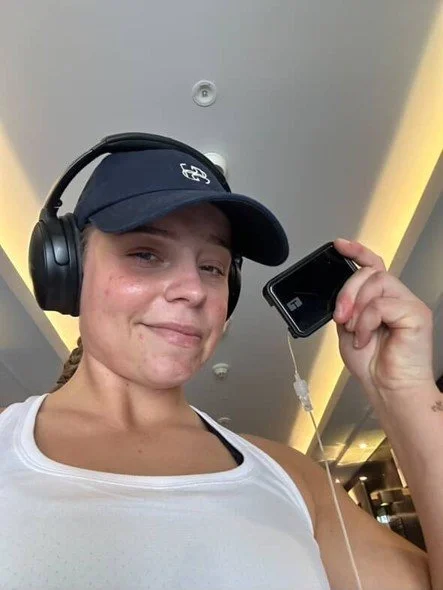
“I always said I was probably a naturally better cricketer than runner. I just worked really hard at running, and I loved it. All my best friends did it. I trained really hard for it. Cricket, I didn’t love so much. I had the natural talent, but I didn’t love it. Now that’s completely changed. I absolutely love it, but I’m glad it happened in my own time and no-one forced me to do it.”
OBSTACLE AFTER OBSTACLE
But, as if a diagnosis of type 1 wasn’t enough of a test, Jess has found herself fighting back from a number of serious health challenges: Bell’s Palsy, Endometriosis, Popliteal Artery Entrapment Syndrome (PAES), and Compartment Syndrome.
Ironically, it was the Compartment Syndrome that Jess says helped steer her away from running and towards cricket. An injury at 16 started a two-year process to find out what was causing pain in her calves. She used to be able to run for an hour and half, but after the injury all she could manage was five to10 minutes before the intense pain made her stop. Surgery wasn’t successful, so she went to Australia for Botox injections in her calves, and this is when she received the new diagnosis of Popliteal Artery Entrapment Syndrome (PAES).
PAES is a rare condition where the calf muscles squeeze the popliteal artery, which runs through and behind the knee, limiting blood flow to the lower leg when exercising. Surgery has a high success rate, but Jess says only being able to run short distances, and fast, is not a hindrance in cricket.
Jess says, by this time, she knew the cause of the pain, the ‘running ship’ had sailed, and she was in the Wellington Blaze wider squad. Her sister, Melie Kerr, was also playing for them and shortly ended up playing for New Zealand, an appointment that inspired Jess to go down that route.
‘The female game of cricket was rising, and I thought, if I put my mind to it, I can one day represent New Zealand and make a career out of that.’
A QUARTER OF THE TRAVELLING SQUAD
Being a successful cricketer has made Jess not only a role model within her sport but also for diabetes, a role she says she enjoys. ‘I’ve noticed of late people who are type 1 come to talk to me. After a game, having that interaction is cool. One girl in Dunedin comes to pretty much every game that the White Ferns play there. I know her face now. At first, I met her Dad and he was saying how it’s great to see you out on TV, doing what you love, and we love that for our daughter who’s type 1.’
When Jess is playing with the Blaze, her Wellington team, she’s not the sole player with diabetes. In fact, she’s bookended by captain, Sophie Devine, and up-and-coming batter Kate Chandler, who both have type 1 as well. Jess says, with diabetes affecting a quarter of the travelling squad, if any of the three are feeling low while training the other two know exactly how they feel. ‘It’s really nice to have that support.’